Overview
We are happy to announce the 15th Workshop and Industry Panel on Cooperative Automated Driving and Future Mobility Systems, which has been officially accepted as part of the IEEE Intelligent Vehicles Symposium (IV 2026). This event will take place on 21st June 2026 in Detroit, MI, United States.
This full-day workshop provides an in-depth exploration of key advancements shaping automated driving and future mobility systems. It examines the interaction between large fleets of fully automated vehicles, but also human-driven vehicles, vulnerable road users, intelligent infrastructure, and coordinating bodies. The workshop also addresses the challenges of deploying Cooperative Intelligent Transportation Systems (C-ITS), which require extensive collaboration among stakeholders, including governments, industry leaders, and researchers. The sessions feature a mix of keynote presentations, a paper session, and industry panels with experts from OEMs, suppliers, and the ICT sector, fostering interactive exchanges between academia and industry.
List of Topics
The workshop is built around topics that are relevant for both academia and industry.
- Reference Architectures and Standardization
- C-ITS Infrastructure and Fleet Management
- Distributed Intelligence and Software Orchestration
- Cooperation and Connection using V2X Communication
- AI-driven Development and AI Systems
- Simulation-based Development and Testing
- Continuous Improvement, DevOps and MLOps
- Modular Safety Assurance and Impact Assessment
Call for Workshop Papers
We invite researchers and professionals to contribute to the 15th Workshop and Industry Panel on Cooperative Automated Driving and Future Mobility Systems. Share your insights and innovations on topics that are shaping the future of mobility, and submit your workshop paper. The key topics are highlighted in the list above but can be adjusted as long they cover theory, methodology, or application in the broad area of future mobility systems.
Important Dates
- Workshop Papers Submission: January 30, 2026
- Notification of Acceptance: February 28, 2026
- Final Paper Submission: March 15, 2026
- Workshop Date: June 22, 2026
Submission and Templates
Submissions can be uploaded via the official IEEE IV papercept submission website, following the conference guidelines:
- Submissions may be up to 6 pages in length, allowing for 2 additional pages.
- All papers must be formatted according to the IEEE format (e.g. using the IEEE LaTeX Template).
- Papers will be evaluated based on novelty, technical quality, potential impact, and clarity of writing.
- At least one author of an accepted workshop paper is required to register for the workshop and attend in person.
Accepted papers will be featured in the conference workshop proceedings and additionally published on this workshop website.
For questions, please contact the organizers or visit the IEEE IV 2026 website.
Organizers
The workshop is organized by leaders from academia and industry.
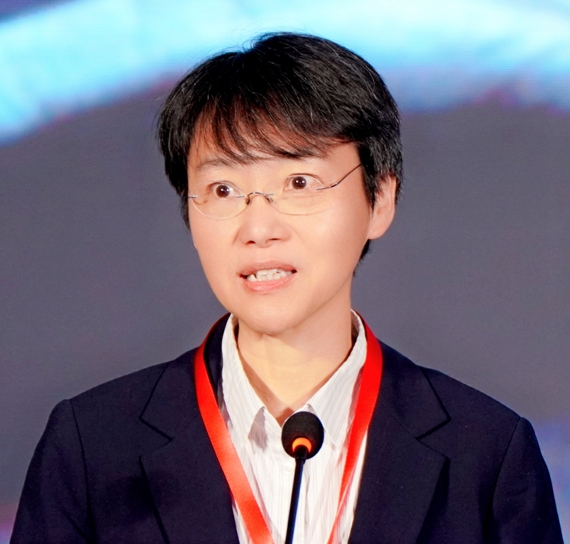
Dr. Meng Lu
ITS Aeolix / IEEE Standards Association
Bio
Dr. Meng Lu (The Netherlands) - ITS Aeolix; Member, Board of Governors, IEEE Standards Association (IEEE SA); VP Standards Activities, IEEE Intelligent Transportation Systems Society. Previously, Strategic Innovation Manager at Peek Traffic (NL), Program Manager at the Dutch Institute of Advanced Logistics (NL), and Visiting Professor at the National Laboratory for Automotive Safety and Energy, Tsinghua University (CN). Active involvement in European R&D and innovation projects since 2002. Contribution to standardization activities of ISO/TC 204 (also Head of Delegation (NL) 2021-2023) and IEEE. PhD at Lund University, Sweden; Master's title and degree of Engineering in The Netherlands and P.R. China.

Christian Geller
Institute for Automotive Engineering (ika), RWTH Aachen University
Bio
Christian Geller is a Research Associate and PhD Candidate in the Vehicle Intelligence and Automated Driving department at the Institute for Automotive Engineering (ika) at RWTH Aachen University. His research focuses on simulation architectures, aiming to scale the automated testing process for automated driving systems within the DevOps cycle. As a specialist in simulation-driven development and testing, he works to integrate simulation into the vehicle development lifecycle. He also serves as Project Manager in the German-funded research project autotech.agil, exploring connectivity between all relevant entities in future mobility systems. Additionally, he is one of the main organizers of this joint IV workshop.

Tim Leinmueller
DENSO
Bio
Tim Leinmueller is heading DENSO's European fundamental technology R&D department. His group is responsible for R&D in the domains of cybersecurity, microcontrollers, in-vehicle networks, and wireless communication. Tim is responsible for DENSO's involvement in the 5G Automotive Association (5GAA), where he is an elected member of the board since 2018, and elected Vice Chair of the board since 2024. He has been serving as chair of WG1 from 2019 to 2024. Furthermore, he is representing DENSO in connectivity and CCAM (cooperative, connected and automated mobility) related activities in ETSI, CLEPA, ERTRAC, VDA, the CCAM Partnership, and ERTICO where he is also a member of the strategy committee. In total, Tim is working in the connected vehicles domain for more than 20 years. He is/has been serving in related organizations in multiple positions, amongst others as member of the technical committee and as chair of the architecture working group in the CAR 2 CAR Communication Consortium (C2C-CC).
Description
Different keynotes address essential topics, including Reference Architectures and Standardization, which lay the foundation for interoperability across platforms, and Intelligent Infrastructure and control centers, where smart infrastructure components support real-time vehicle and fleet operation. Distributed Intelligence and Software Orchestration are more advanced strategies for managing complex systems and are discussed to enhance autonomous functionality. Further areas of interest include Cooperative and Collective Functions for vehicle perception or planning to improve traffic safety and efficiency. Crucial foundations for safe and reliable vehicle interaction are secure V2X Communication methods.
Another focus is on AI-driven development and AI systems, exploring how artificial intelligence is transforming both the development process and operational capabilities of intelligent transportation systems, such as decision-making, adaptive route planning, or predictive maintenance. The workshop also emphasizes strategies for Continuous Improvements as part of the DevOps process. In particular, Simulation-Based Development and Testing methods enable robust and Continuous Safety Assurance.
Alongside all keynotes, the workshop also features a paper session, offering attendees a chance to engage with in-depth technical insights and discuss the latest research advancements. The workshop is designed for researchers and industry experts looking to deepen their understanding of both the technical and operational challenges in intelligent transportation systems.
Program Elements
Keynotes, a paper session, and industry panels with OEM, supplier, and ICT experts, plus audience Q&A.
Who Should Attend
Researchers and industry experts focused on cooperative automated driving, C-ITS deployment, and future mobility systems.
Schedule
The agenda below is a draft structure to be finalized with speakers and panelists.
Registration + Coffee
Welcome desk opens and attendee networking.
Opening Remarks
Workshop chairs outline goals and structure of the workshop.
Invited Speaker Block I
Architectures, Orchestration, Cooperation, Communication.
Panel Discussion
Industry-scale challenges and shared priorities.
Invited Speaker Block II
AI, DevOps, Simulation and Testing, Safety Assurance.
Lunch Break
Lunch and attendee networking.
TBA
Speakers
Confirmed speakers and panelists. Final agenda order to be announced.

Ignacio Alvarez
Intel Labs
Bio
Dr. Ignacio Alvarez is a principal engineer in automated driving at Intel Labs and technical assistant to Intel Labs Director. His research focuses on advanced development of automotive system architectures, software, and simulation tools to accelerate the adoption of safe automated driving. Previously, he worked at BMW developing Vehicle Telematics, HMI and ADS solutions. He has lead R&D and product development in Europe, Asia and America, and contributed to IEEE 2446 and ETSI. He is an avid inventor with 50+ patents, and 130+ patents pending. PhD in Computer Science applied to Automotive Engineering (Univ. Basque Country (ES) & Clemson Univ. (USA)).
Sergei Avedisov
Toyota InfoTech Labs
Bio
Sergei Avedisov works as a Principal Researcher at Toyota InfoTech Labs. His research interests include cooperative localization, cooperative perception, cooperative maneuvering, teleoperated driving, and urban air mobility. Sergei has graduated from the University of Michigan, Ann Arbor with a PhD in Mechanical Engineering in 2019.

Robert Gee
Continental
Bio
For over 30 years, Robert Gee has been a strategy manager and futurist for companies including IBM, Motorola, and now Continental. He currently focuses on standards, government, and intellectual property.

Javier Ibanez-Guzman
Renault S.A.
Bio
Dr. Javier Ibanez-Guzman received M.S.E.E. (University of Pennsylvania, USA, as a Fulbright Scholar); Ph.D. (University of Reading, on an UK SERC fellowship). He was Visiting Scholar at the University of California, Berkeley. Currently Corporate Expert on Autonomous Systems at Renault S.A., and co-director of the SIVALab Common Laboratory between the CNRS, UTC Compiegne and Renault working on intelligent vehicle technologies. Representative to ISO groups associated to autonomous vehicles and AI. Formerly, he was a Senior Scientist with SimTech, A-Star research institute, Singapore. He is a C.Eng. and fellow of the Institute of Engineering Technology, U.K.

Tom Lusco
Iteris
Bio
Tom Lusco (Iteris) is a system architect and developer of the Architecture Reference for Cooperative and Intelligent Transportation (ARC-IT), that serves as reference architecture for North America and is extensively used in planning, deployment and standards development. He has more than 30 years of experience in systems engineering and the application of standards to technical development. He has participated in and led international harmonization and standards development activities. He collaborated with an team of international experts to develop the mechanisms to reference standards in such a way as to provide standards guidance to the users of ITS architecture products and tools. He is heavily involved in the development of reference architectures for ITS and smart cities, and participates regularly in standards developments in ITS, vehicle connectivity, cybersecurity and smart cities.

Prof. Johann Marquez-Barja
University of Antwerp, IMEC
Bio
Prof. Marquez-Barja is a distinguished academic and researcher, currently holding a dual role as a Professor at the University of Antwerp and IMEC, Belgium. He leads the Flexible & Programmable Networks Group at IDLab/imec Antwerp, where he has played a pivotal role in advancing wireless technology and communication networks. He has been involved in numerous European research projects. His research interests encompass cutting-edge areas like 5G/6G architectures, edge computing, and IoT. He is also deeply committed to connected mobility development, and leads the Citylab Smart City testbed and SmartHighway in Antwerp. He has received numerous awards, and authored 250+ publications.
Thomas Monninger
Mercedes-Benz Research & Development North America
Bio
Thomas Monninger is a Staff Machine Learning Engineer at Mercedes-Benz Research & Development North America, specializing in novel machine learning technologies for autonomous driving. Over his ten-year tenure at Mercedes-Benz, he has worked on various aspects of this field, including Perception, Sensor Fusion, Prediction, and Mapping. He has published academic papers on these subjects and holds several related patents. Thomas earned his Master's degree in Computer Science from University of Stuttgart, Germany, focusing on Machine Learning, Computer Vision, and Robotics.

Enrico Natalizio
Technology Innovation Institute (UAE) / LORIA, Universite de Lorraine
Bio
Enrico Natalizio (Senior member IEEE) is currently Chief Researcher of the Autonomous Robotics Research Center with the Technology Innovation Institute (UAE) and a Full Professor with the LORIA laboratory at the Universite de Lorraine (France). He obtained his master's degree magna cum laude and his Ph.D in Computer Engineering at the University of Calabria (Italy) in 2000 and 2005 respectively. His research interests include UAV communications and networking, robot and sensor communications with applications in networking technologies for disaster management and infrastructure monitoring, and IoT privacy and security. He has been ranked in the top-2% world-wide scientists of the Stanford-University's bibliometric study for the year 2021 and 2024.

Nicolas Ochoa
DENSO
Bio
Nicolas Ochoa has bachelor's and master's degrees in mechanical engineering from Universidad de los Andes, and a PhD in controls from Penn State University. Since 2019 he works at DENSO in the R&D division, investigating the role of simulation in the automotive development process. Currently, he focuses on Model-Based Systems Engineering (MBSE), and scenario-based testing for AD/ADAS. Nicolas also participates in ASAM as a lead contributor to the OpenSCENARIO standards.
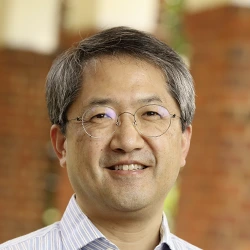
Prof. Brian Park
University of Virginia
Bio
Brian Park is a Professor in the Departments of Civil and Environmental Engineering and Systems and Information Engineering at the University of Virginia. His research focuses on enhancing surface transportation systems through connected automated vehicle controls, traffic operations, and management strategies. Dr. Park earned his B.S. and M.S. from Hanyang University in Seoul, Korea, and his Ph.D. from Texas A&M University. He has received numerous awards, including the Charley V. Wootan Award and the George N. Saridis Best Paper Award. He is an associate editor of the ASCE Journal of Transportation Engineering and the Journal of the Intelligent Transportation Systems.

Dhruv Patel
Zoox (Amazon)
Bio
Dhruv Patel is a Systems Engineer at Zoox (Amazon) and former Diagnostics Lead at General Motors. He is the inventor of 10 U.S. patents that advance Intelligent Transportation Systems, including innovations in EV range optimization, active safety, road hazard detection, autonomous navigation, and smart diagnostics. His work has enabled regulatory compliance, improved vehicle safety, and enhanced real-time decision-making in connected and automated vehicles. Dhruv is an active member of IEEE ITSS, contributing to standards development and peer review for IEEE and SAE journals. He regularly speaks at IEEE events, promoting innovation across industry and research in future mobility systems.
Contact
Reach out to the workshop organizers or visit the conference website for updates.